
Wednesday, June 23, 2010

So the Asanas - The 3rd Limb
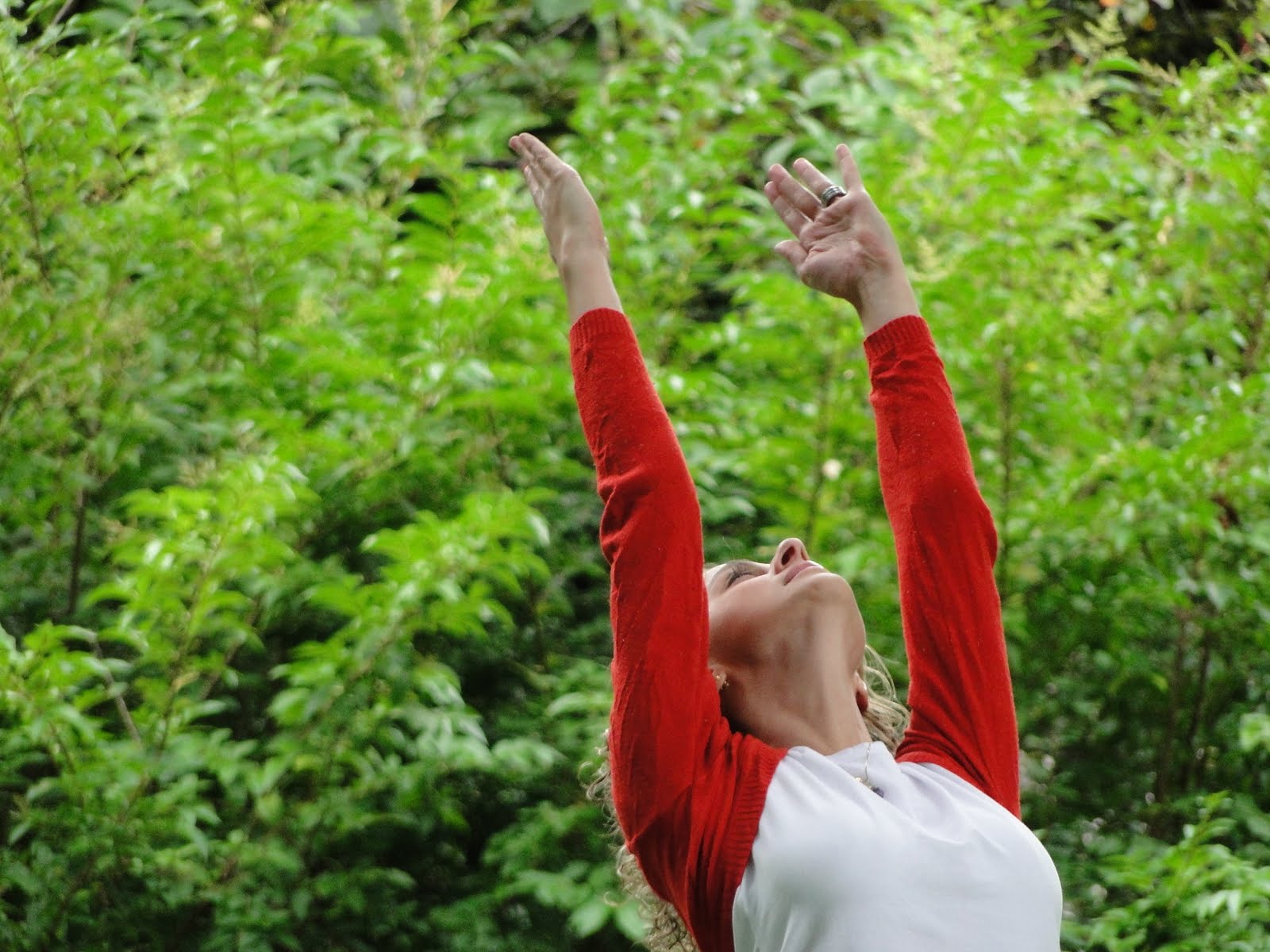
The Asanas are the physical yoga poses practiced to prepare ourselves to sit in meditation. Asana being a Sanskrit word for Seat.
Yoga in its completeness is a way of life that allows total transformation.
The Physical Postures (Asanas) can serve as an introduction to this, initially reintroducing us to our bodies.
What is being taught under the name of Yoga and what is taught at Outdoor Yoga is a minute part of a much much wider tradition. From a fitness and physical health perspective the benefits are endless (quite a few are listed in one of the first blogs) and if that is where it starts and ends for you I am very glad that it has helped you in some way.
So I'm using this blog to fill in some of the blanks that are left from an hour per week in a Yoga class which is mostly if not wholely Asana based. So if that is your experience of Yoga you are familiar enough with the physical and seeing as I'm trying to make this as 'bitesize' as possible we will leave the Asanas there for now.
In Yoga we say Mental Tension (anxiety, depression) manifests as Stiffness in our Physical body. The Asanas are practiced to settle the Body so that we can sit in comfort and stillness.
'Within is the wellspring of Good; and it is always ready to bubble up, if you just dig.' Marcus Aurelius
Yoga in its completeness is a way of life that allows total transformation.
The Physical Postures (Asanas) can serve as an introduction to this, initially reintroducing us to our bodies.
What is being taught under the name of Yoga and what is taught at Outdoor Yoga is a minute part of a much much wider tradition. From a fitness and physical health perspective the benefits are endless (quite a few are listed in one of the first blogs) and if that is where it starts and ends for you I am very glad that it has helped you in some way.
So I'm using this blog to fill in some of the blanks that are left from an hour per week in a Yoga class which is mostly if not wholely Asana based. So if that is your experience of Yoga you are familiar enough with the physical and seeing as I'm trying to make this as 'bitesize' as possible we will leave the Asanas there for now.
In Yoga we say Mental Tension (anxiety, depression) manifests as Stiffness in our Physical body. The Asanas are practiced to settle the Body so that we can sit in comfort and stillness.
'Within is the wellspring of Good; and it is always ready to bubble up, if you just dig.' Marcus Aurelius
Monday, June 14, 2010
Hatha Yoga
The complete system of Hatha Yoga increases vital energy by aligning our physical and subtle bodies, through
Asana Physical Poses 3rd Limb
Pranayama Guiding and enhancing the life force through breathing practices 4th Limb
Pratyahara Encouraging the senses inward through deep relaxation. 5th Limb
All 3 are supposed to be practiced together. Each one being as important as the next. This being one of two points worth making before we move on.
Second point being Hatha Yoga does not just mean a series of physical poses (Asanas) but also practicing the breathing techniques (Pranayama) and encouraging the senses inward (pratyahara) in unison.
Ha-tha
Ha
represents:
the sun
heating
qualities of reason
intellectual thinking
masculine
Tha
represents:
the moon
cooling
emotion
intuitive feeling
feminine
Ha-tha is the integrative energy of the two within every one of us
light and dark
sun and moon
masculine and feminine
And the more balanced these are, the more at harmony one feels.
Next time we will start with the first mentioned of the 3 elements of Ha-tha Yoga.
Asana
Have a fantastic day:)
Om
Asana Physical Poses 3rd Limb
Pranayama Guiding and enhancing the life force through breathing practices 4th Limb
Pratyahara Encouraging the senses inward through deep relaxation. 5th Limb
All 3 are supposed to be practiced together. Each one being as important as the next. This being one of two points worth making before we move on.
Second point being Hatha Yoga does not just mean a series of physical poses (Asanas) but also practicing the breathing techniques (Pranayama) and encouraging the senses inward (pratyahara) in unison.
Ha-tha
Ha
represents:
the sun
heating
qualities of reason
intellectual thinking
masculine
Tha
represents:
the moon
cooling
emotion
intuitive feeling
feminine
Ha-tha is the integrative energy of the two within every one of us
light and dark
sun and moon
masculine and feminine
And the more balanced these are, the more at harmony one feels.
Next time we will start with the first mentioned of the 3 elements of Ha-tha Yoga.
Asana
Have a fantastic day:)
Om
Tuesday, June 8, 2010
Yamas and Niyamas - The 1st and 2nd Limbs

So the first Limb of the 8 faceted Path (Ashtanga Yoga) is the Yamas. This is most commonly translated as 'restraints' with its literal translation being 'Death'.
We can say the Yamas are a Code of Conduct for living which will help bring a compassionate death to the ego or the 'lower self'.
The nicest translation of the Yamas I have come across is reflecting our true nature as 'restraints' conjures up negative responses.
There are 5 guiding Yamas being:
Ahimsa: Non-harming to others and ourselves
Satya: Being truthful to others but also within ourselves and having integrity
Astheya: Non-stealing - Generosity and Honesty
Brahmacharya: Balance and Moderation of the vital life force
Aparigraha: Letting go of desires/Fulfillment
Niyamas are the self-observances which can be described as evolution towards harmony which also has 5 parts
Saucha: Simplicity, Purity, Cleanliness
Santosha: Contentment, being at peace with oneself and others, accepting what life brings you.
Tapas: Disciplined Practice
Swadhaya: Self-study, the study of spiritual texts to help understanding
Ishwara Pranidhana: Surrender to a higher being.
The Yamas and Niyamas are the first two limbs of Ashtanga Yoga and most commonly translated as the restraints and self-observances, five facets in each and have been described as the 10 Commandments of Yoga and also the Dos (Niyamas) and Don'ts (Yamas).
The exact meanings can be lost or often misinterpreted at least when translated from Sanskrit as Yoga really is much more gentle than that as I translate it anyway.
If the Yamas are described as reflecting our true nature then all that is good is our true nature and by trying to adhere to/follow the five facets we are simply returning to who we really are.
So these are the first 2 Limbs of Ashtanga Yoga prescribed by Patanjali in the Yoga Sutras (we'll get into that later). So not a mention of the Asanas (Postures) or Pranayama (Breathing techniques) just yet as would be guessed by most when asked what is the first two limbs of Ashtanga yoga.
I'll leave it there hoping what is written is clear, concise and bitesize enough for a quick read while taking a break at work or wherever this finds you.
Thursday, May 20, 2010
So if Yoga is split up into 8 parts, what are they?
 OK so here goes. I'm not sure how far this blog will go but if there is one thing I did want to go through using this medium it is Ashtanga Yoga.
Ashtanga Yoga is all of the elements of Yoga practice listed in eight principles. It is seen as a guide to practically applying Yoga to our daily life.
Ashtaanga being two words simply meaning 8 (Ashta) and tanga can be translated as limbs, principles or intertwining facets.
The most important thing to remember regarding the relationship between these 8 principles is that they are an integrated system.
What do we mean by that?
It means that Ashtanga is not a series of points to accomplish/complete then moving on to the next. Instead they interact and function interdependently as a whole.
'Within Yoga Philosophy it is said that by embracing Ashtanga Yoga, intuitive wisdom dawns and reveals our inner radiance.'
I think it's very easy to make things sound an awful lot more complicated than they need to be and a lot of the time if anything sounds too religious or flower-power hippyish it can immediately register as negative to the listener/reader.
I'll end this blog by rephrasing the quote above
Within the Yoga tradition we say that by understanding the 8 limbs and following them as much as we can. Our natural tendency towards enlightenment or knowing ourselves is encouraged therefore revealing our inner light or simply who we really are.
So the next time I will start with the first limb of Ashtanga Yoga.
Have a great day whatever you're up to:)
Wednesday, May 19, 2010
So what's all this Yoga really about??
Hi there,
Thanks very much for stopping by. I've left this blog untouched pretty much since I set it up last year. It was suggested to me that it would be a good idea to set one up but didn't see the need or any reasoning for one until now.
Unfortunately there is only so much you can cram into a 1 hour class and due to the fact that we practice outdoors for 5-6 months a year our focus is almost entirely on the 3rd Limb of Yoga which is the Asanas (postures......the physicality of yoga) but there are 8 and 2 preceding what we tend to practice primarily if not solely.
I'm going to use this Outdoor Yoga Blog to fill in the blanks so to speak in a fast-life-friendly bitesize version covering what we don't get to go through in class as we only have such a short time together.
The vast majority of people take up Yoga for Flexibility, Fitness, Strengthening, Stress Relief and a myriad of reasons associated with physical issues which is absolutely fine and if one wants to leave it there that's perfectly fine too.
However if you'd like to learn a little bit more about what Yoga is about you can follow this blog and hopefully it'll add to your yoga practice or be the beginnings to:)
Hoping you're having a fantastic day wherever this finds you.
Thanks very much for stopping by. I've left this blog untouched pretty much since I set it up last year. It was suggested to me that it would be a good idea to set one up but didn't see the need or any reasoning for one until now.
Unfortunately there is only so much you can cram into a 1 hour class and due to the fact that we practice outdoors for 5-6 months a year our focus is almost entirely on the 3rd Limb of Yoga which is the Asanas (postures......the physicality of yoga) but there are 8 and 2 preceding what we tend to practice primarily if not solely.
I'm going to use this Outdoor Yoga Blog to fill in the blanks so to speak in a fast-life-friendly bitesize version covering what we don't get to go through in class as we only have such a short time together.
The vast majority of people take up Yoga for Flexibility, Fitness, Strengthening, Stress Relief and a myriad of reasons associated with physical issues which is absolutely fine and if one wants to leave it there that's perfectly fine too.
However if you'd like to learn a little bit more about what Yoga is about you can follow this blog and hopefully it'll add to your yoga practice or be the beginnings to:)
Hoping you're having a fantastic day wherever this finds you.
Subscribe to:
Posts (Atom)
